Skip to content

Table of Contents
If you have been wondering whether fat grafting is just for one area of the body, the answer is no. Fat grafting can be used in several areas where volume has been lost or where contour needs to be improved. At MilfordMD Cosmetic Dermatology Surgery & Laser Center, this treatment moves your own fat from one part of the body, where you don’t want or need it, to another for natural-looking volume restoration.
That makes fat grafting appealing to people who want a softer, more natural approach to enhancement. Instead of using a synthetic product, or very often in addition to, this procedure uses your own fat to rebuild, rebalance, and restore volume in areas such as the face, breasts, hands, and buttocks.
What is fat grafting, and what areas of the body can be treated?
Fat grafting is a procedure that removes fat from one area of the body and transfers it to another area that needs more volume or contour improvement. At MilfordMD Cosmetic Dermatology Surgery & Laser Center, common fat grafting treatment areas include the face, breasts, hands, buttocks, and scars, making it a versatile option for patients who want natural-looking enhancement using their own fat.
What Is Fat Grafting?
Fat grafting is a cosmetic fat transfer procedure that gently removes fat from one area of the body and places it into another area that needs more fullness or better contour. You may also hear it called facial fat transfer, fat injection, fat rebalancing, or autologous fat transfer. The core idea is the same. Your own fat is used as the filler material. Additionally, fat can be sized down to nano fat for small areas requiring precision, such as lips.
This matters because many people want improvement that still feels like their own tissue. In that sense, natural volume restoration with fat transfer is one of the biggest reasons patients ask about it. It is not only about adding volume. It is also about improving balance and shape in a way that fits your body.
How Fat Grafting Works
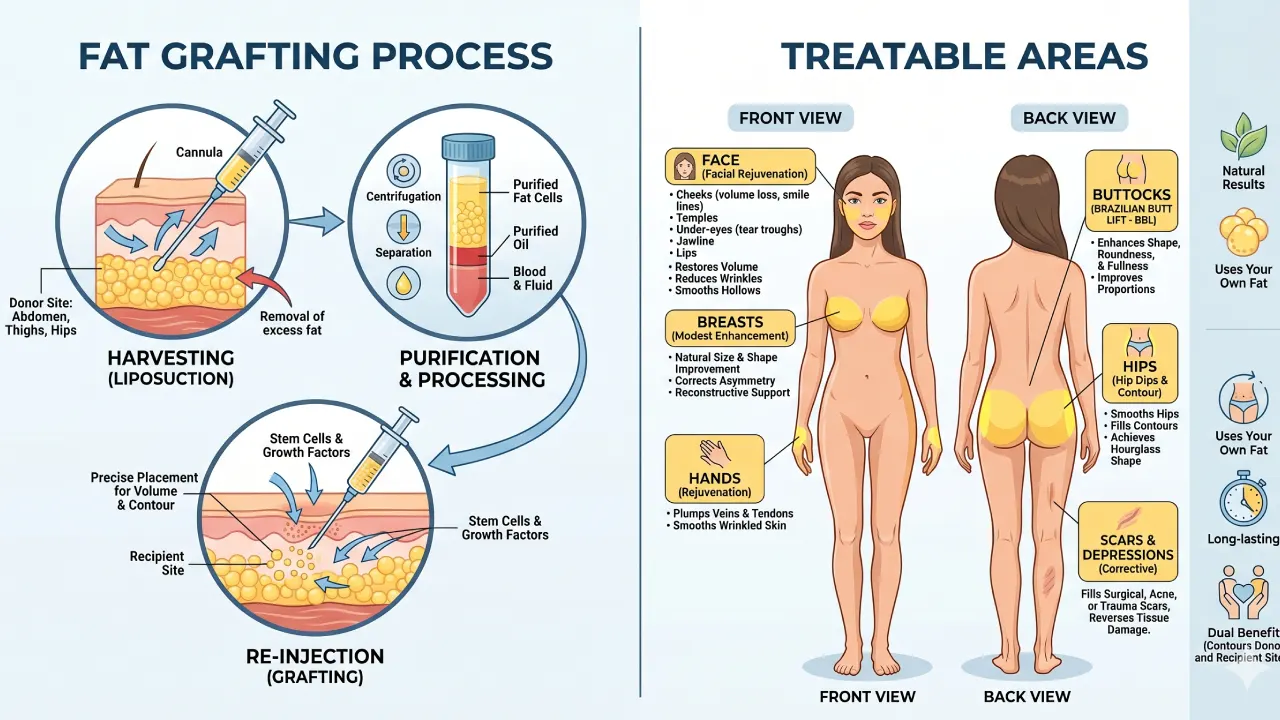
The process starts by taking fat from a donor area of the body. That fat is then prepared and carefully transferred into the treatment area. The placement step is done with care because the goal is to preserve healthy fat cells so they can survive after transfer. At MilfordMD Cosmetic Dermatology Surgery & Laser Center, fat transfer is performed with local numbing anesthesia, without incisions or stitches.
Even though the concept sounds simple, technique matters. Fat has to be removed gently, handled properly, and placed strategically to support smooth-looking results. That is why the procedure is more involved than simply adding volume to one spot.
What Areas of the Body Can Be Treated With Fat Grafting?
This is the main question, and it deserves a direct answer. At MilfordMD, fat grafting treatment areas include the face, breasts, hands, and buttocks.
These are some of the most common fat grafting areas of the body because volume loss or contour concerns tend to show up clearly there:
- Face: to soften hollow areas, restore youthful fullness, or improve facial contour
- Breasts: to add fullness or refine shape
- Hands: to replace lost volume that can make the hands look thinner or more aged
- Buttocks: to improve contour and enhance fullness
So when people ask about body areas for fat transfer, the answer is not limited to one region. The treatment can be adapted based on where volume is missing and where added contour would look most beneficial.
Why Patients Choose Fat Grafting for Different Areas
Different treatment areas come with different concerns, but the reason many patients choose fat grafting is often the same. They want volume that looks and feels more natural because it comes from their own body.
In the face, volume loss can happen with age. Cheeks may look flatter, contours may look less defined, and some features can start to appear droopy or hollow. Fat transfer can help restore softness and support in those areas.
In the breasts, buttocks, and hands, the goal may be a little different. Some patients want more fullness. Others want rebalancing after natural changes in body shape. Some simply want improvement without using an implant or a synthetic filler. That is where autologous fat transfer often stands out. It allows the treatment to focus on your own tissue while also improving contour.
Where the Transferred Fat Comes From
A lot of people focus on where the fat is going, but the donor area is part of the story too. At MilfordMD Cosmetic Dermatology Surgery & Laser Center, fat can be taken from areas such as the arms, abdomen, hips, thighs, inner knees, as well as elsewhere, depending on each individual patient’s distribution of fat..
The donor area is not chosen at random. It depends on how much fat is available, your body shape, and the amount of transfer needed. In other words, the plan should fit the patient, not the other way around.
This is also why the treatment should not be confused with a general liposuction discussion. Fat is being removed, yes, but here the point is not simply reduction. The point is to use that fat for restoration somewhere else.
What Makes Fat Grafting Different From Simple Volume Add-Ons
Fat grafting is different from a basic volume add-on because it involves both removal and placement. Tissue is harvested from one area and then used to rebuild another. That gives the procedure a dual purpose. It can reduce fullness in a donor area while adding fullness where it is wanted most.
At MilfordMD, fat grafting is used to rebuild, rebalance, and replace lost volume. That matters because many patients are not looking for a dramatic change. Quite often, they want a more complete, healthier-looking contour that still feels like them.
Another practical difference is that this procedure is performed with local anesthesia and without incisions or stitches. For some patients, that can make the idea of treatment feel more approachable.
Who May Consider Fat Grafting
Fat grafting may be worth considering if you want to restore youthful volume, improve contour, or address fullness loss in areas like the face, breasts, hands, or buttocks. It can also appeal to people who like the idea of using their own fat instead of relying on dermal fillers in certain treatment plans.
That said, not every patient has the same goals or the same amount of donor fat available. A personalized consultation is important because the best fat grafting treatment areas depend on your anatomy, your concerns, and the overall look you want to achieve. The treatment plan should match the person, not a one-size-fits-all formula.
A More Natural Way To Restore Volume
If you have been looking into fat grafting areas of the body and wondering whether this treatment could work for your face, breasts, hands, or buttocks, the best next step is to talk through your goals with our staff. At MilfordMD Cosmetic Dermatology Surgery & Laser Center, we help patients from New Jersey, New York City, Pennsylvania, and the surrounding Tri-State area. If you’re considering fat grafting to restore volume or improve body contours, the team at Milford is here to help. Book your consultation today and discover if this treatment is right for you.